


System Overview SectorOps is a relational database centralizing commercial real estate financing, loan restructuring, and portfolio management operations. The system eliminates standalone software and fragmented spreadsheets to maximize execution speed and data integrity. It serves as the operational hub and corporate memory for loan officers, syndication managers, and commercial real estate brokers.
System Architecture & Core Modules
Relational CRM Architecture: Operates a network matrix establishing hierarchies across VIP Clients, Borrowing Entities, and Capital Providers. Matches KYC/AML clearance statuses, FICO scores, and institutional lending criteria.
Deal Flow & Operations: Utilizes a Kanban board to govern the lifecycle from intake to funding, tracking rate locks and mandatory pre-closing checklists.
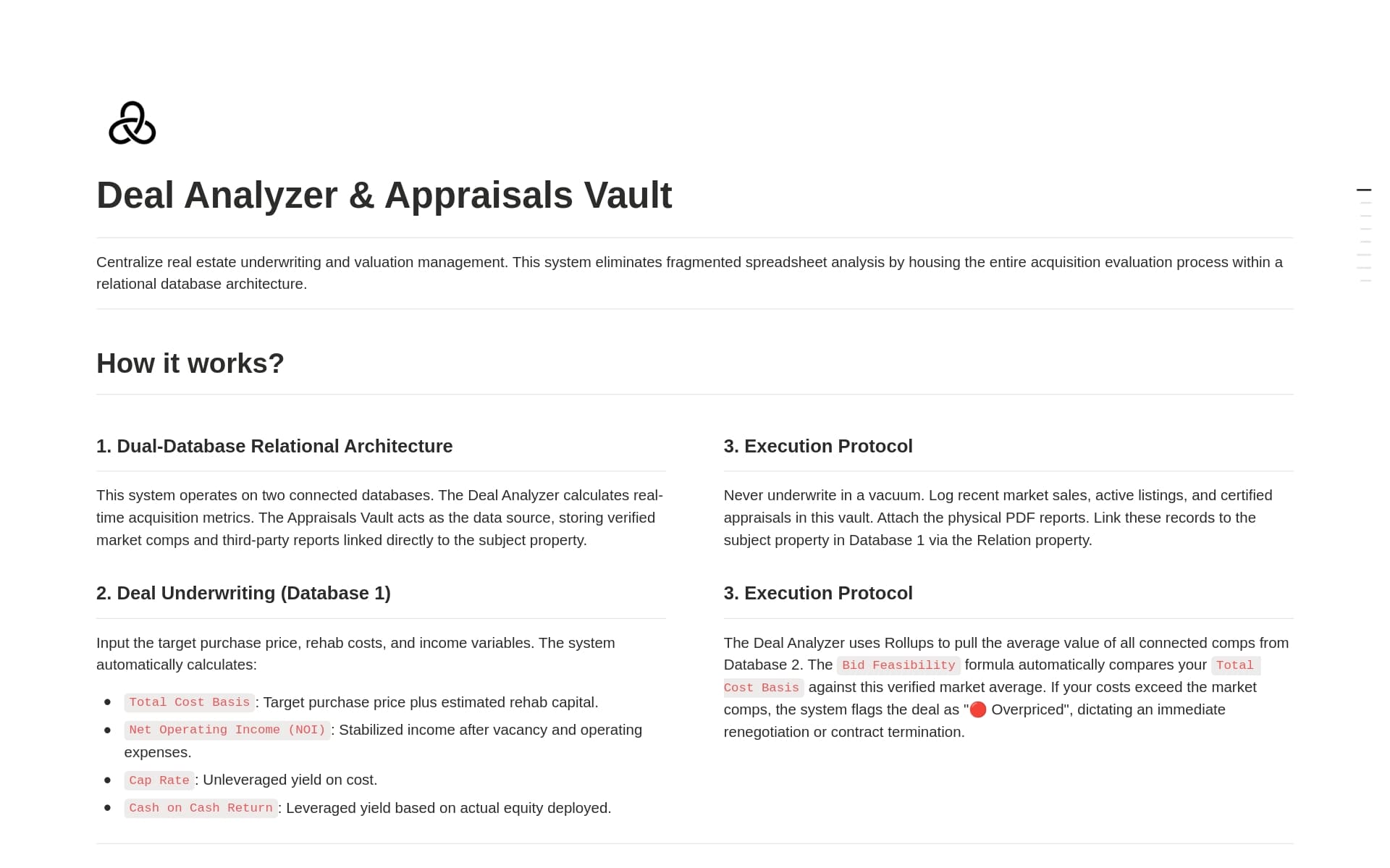
Asset & Collateral Vault: Maintains an asset inventory housing appraised property values, Net Operating Income (NOI), 120-day appraisal expirations, and 1st/2nd position lien registries.
Financial Underwriting: Executes stress tests based on rent rolls or operating balance sheets, Debt-to-Income (DTI) metrics, and dynamic debt restructuring calculators.
Document & Compliance Infrastructure: Provides a secure document vault and template library for identification records, financial statements, and legal contracts (Term Sheets, LOIs).
Operational Applications
-
Tracks loan origination, underwriting, and approval pipelines end-to-end.
-
Executes Debt Service Coverage Ratio (DSCR) and Loan-to-Value (LTV) risk analysis for commercial assets.
-
Models refinancing simulations for existing debt to calculate cost-benefit metrics and break-even points.
-
Manages network nodes of borrowing entities (LLCs/Corps), investors, commissioned brokers, and capital providers (lenders/funds).
-
Audits draw schedule disbursements for construction loans and pre-funding legal closing requirements.
Module Breakdown
1. Documents
Template Library: Standardized repository for Letters of Intent (LOI), Term Sheets, Non-Disclosure Agreements (NDA), and Commission Agreements.
Underwriting Vault: Secure storage tracking review statuses and expiration dates for KYC/AML documents, bank statements, tax returns, and balance sheets.
Legal Documents & Company Brand Assets: Archives corporate formation files and brand identity materials.
2. HR
Job Posting & Applicant Tracking: Logs active requisition pipelines and candidate evaluations.
Employees: Personnel database tracking internal profiles and department allocations.
Meetings: Archives management syncs, pipeline reviews, and credit committee decisions.
Employer Feedbacks: Captures internal performance reviews and operational audits.
3. Finance
Fundraising Tracker & Company Investments: Ledger for internal equity rounds and external capital deployments.
Expense Optimization, Reports & Taxes: Manages expense approval workflows, categorizes operational overhead, and controls tax calendaring.
Financial Risks & Budget Planning: Dictates cash flow projections and departmental capital allocations.
4. Assets
Property Portfolio: Master inventory detailing Asset Class, Appraised Value, Net Operating Income (NOI), and Occupancy Rates.
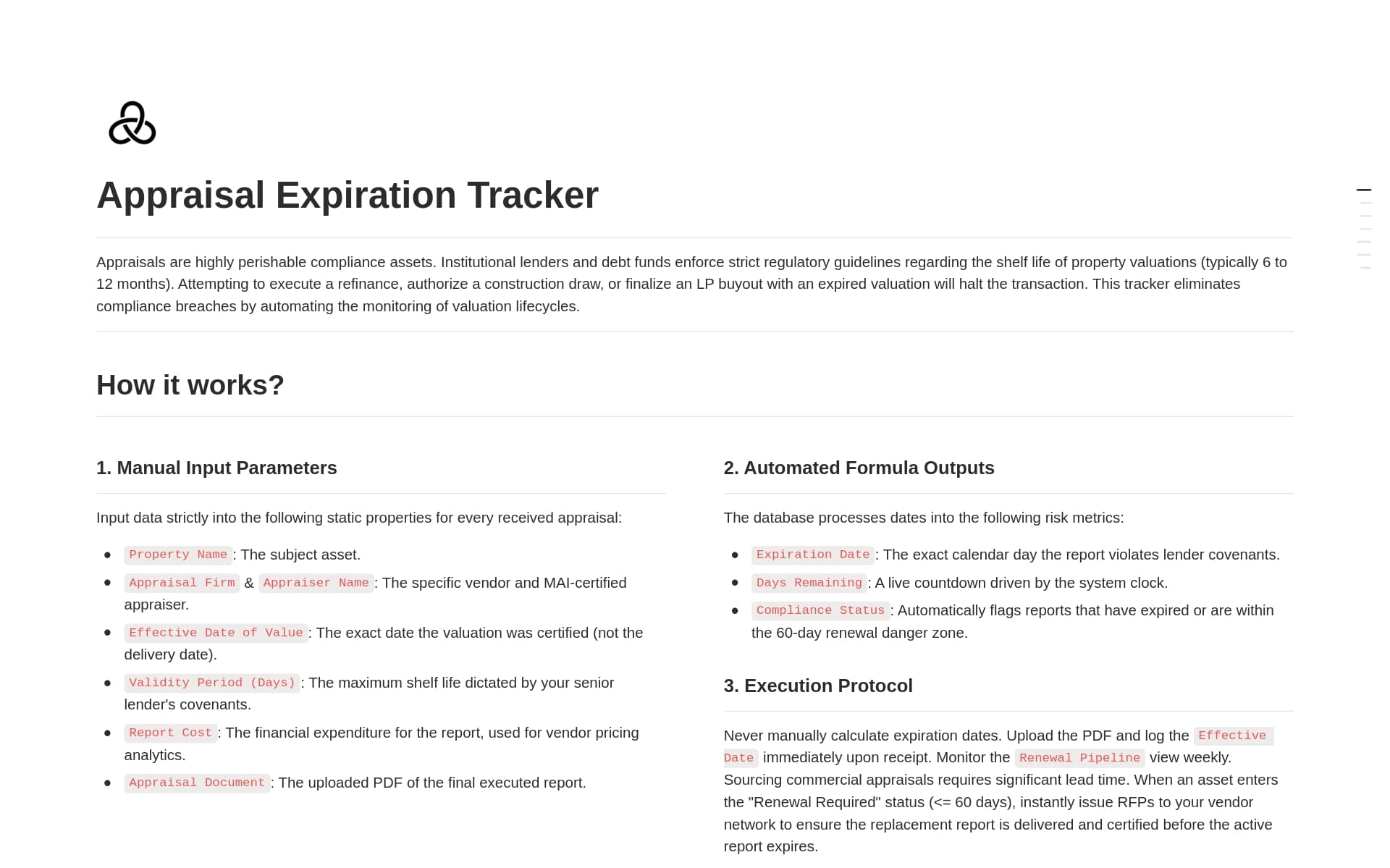
Appraisals: Tracks valuation reports with automated 120-day expiration alerts and "As-Is" versus "As-Stabilized" value metrics.
Lien Registry: Database of active encumbrances including current payoff balances, tax liens, and 1st/2nd position mortgages.
5. CRM
Clients: Top-level hierarchy managing VIP investors, family offices, and syndicators, tracking Total Lifetime Funded Volume.
Borrowers: Entity-level (LLC/Corp) profiles tracking FICO scores, debt-to-income (DTI) ratios, liquid assets, and KYC clearance.
Lead Scoring: Automated triage system ranking inbound loan requests based on target LTV, DSCR estimates, and asset class.
Referrals & Brokers: Network database of commercial brokers, CPAs, and realtors categorized by relationship tier.
Partner Commissions: Ledger tracking total submitted leads, funded volume, and pending commission payouts.
Lender & Syndicate Network: Capital source matrix detailing Base Rates, Max LTV, Min DSCR, and preferred asset classes for external banks and debt funds.
Sales Reports & Invoices: Tracks revenue realization and accounts receivable.
6. Network
Call Book: Daily prospecting logs and communication history.
Sponsors & Partnerships: Tracks institutional joint ventures and strategic alliances.
7. Marketing
Marketing Campaigns & Calendar: Timelines B2B outreach schedules and events.
News: Tracks macroeconomic updates, interest rate changes, and yield curve data.
Customer Feedbacks: Aggregates post-closing surveys from borrowers and broker partners.
8. Analysis
Refinancing Calc: Cost-benefit modeling comparing existing debt against proposed loan scenarios to determine break-even points and monthly savings.
DSCR & LTV Tracker: Automated underwriting module calculating Debt Service Coverage Ratios and Loan-to-Value metrics against stressed vacancy and expense inputs.
Risk Management: Macro-level portfolio risk identification and mitigation logs.
SWOT & Competitor Analysis: Tracks rival lending institution rates, terms, and market positioning.
Company Goals / OKRs: Funded volume targets and departmental objectives.
9. Operations
Loan Pipeline: Kanban-based deal execution tracking from Application Received to Clear to Close (CTC) and Funded, including rate lock tracking. * Closing Checklist: Pre-funding condition clearance tracking, isolating title, escrow, and insurance blockers.
Draw Schedule: Construction loan disbursement management, logging inspection verifications, lien waivers, and approved fund releases.
Relational Integrity SectorOps relational integrity ensures precision tracking of every borrower, asset, and lien. Centralized underwriting and pipeline management guarantee market competitiveness in refinancing.