


Deal Analyzer & Appraisals Vault
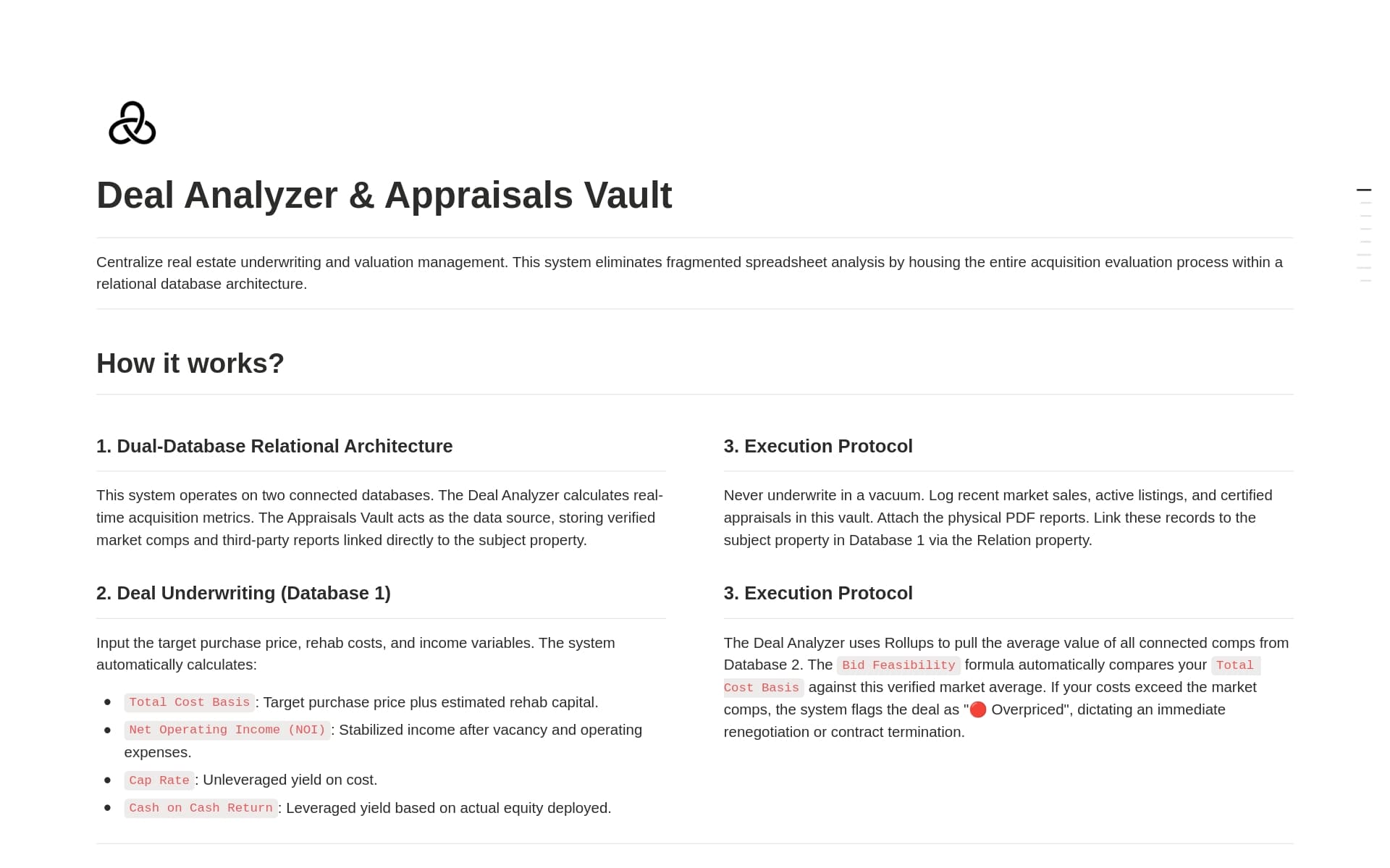
Centralize real estate underwriting and valuation management. This system eliminates fragmented spreadsheet analysis by housing the entire acquisition evaluation process within a relational database architecture.
Valuation Engine
Underwriting requires precision and speed. The core valuation engine allows acquisition managers to input gross potential rent, fixed operating expenses, and estimated vacancy rates. The system instantly processes these variables through standardized formulas to generate critical acquisition metrics, including Capitalization Rates (Cap Rates), Cash-on-Cash Returns, and Gross Rent Multipliers (GRM). By integrating projected debt service variables—such as loan-to-value ratios, interest rates, and amortization schedules—the model calculates precise net cash flows. This enables rapid, objective filtering of prospective deals against strict corporate yield requirements before committing capital to deeper due diligence.
Appraisals Vault
Lending compliance and internal audits mandate strict record-keeping of asset valuations. The Appraisals Vault functions as an immutable repository for all third-party valuation reports. Users can upload high-resolution PDF appraisal documents directly to the corresponding asset record. The database requires mandatory tagging by property type (multifamily, industrial, retail), appraiser firm name, and the effective date of value. This structured archiving prevents lost documentation and accelerates data retrieval during refinancing events, portfolio audits, or LP reporting cycles.
Market Comps Database
Accurate valuation relies on verifiable market data. The Comps Database allows teams to systematically log competitive sales and active market listings. Users track critical comparable metrics such as price per square foot, unit mix, closing dates, and unadjusted cap rates. By cross-referencing subject properties against this continually updated historical dataset, acquisition teams can validate third-party appraisals, challenge tax assessments, and ensure bid accuracy during the offer phase. This builds proprietary market intelligence over time, reducing reliance on external data providers.