


Appraisal Expiration Tracker
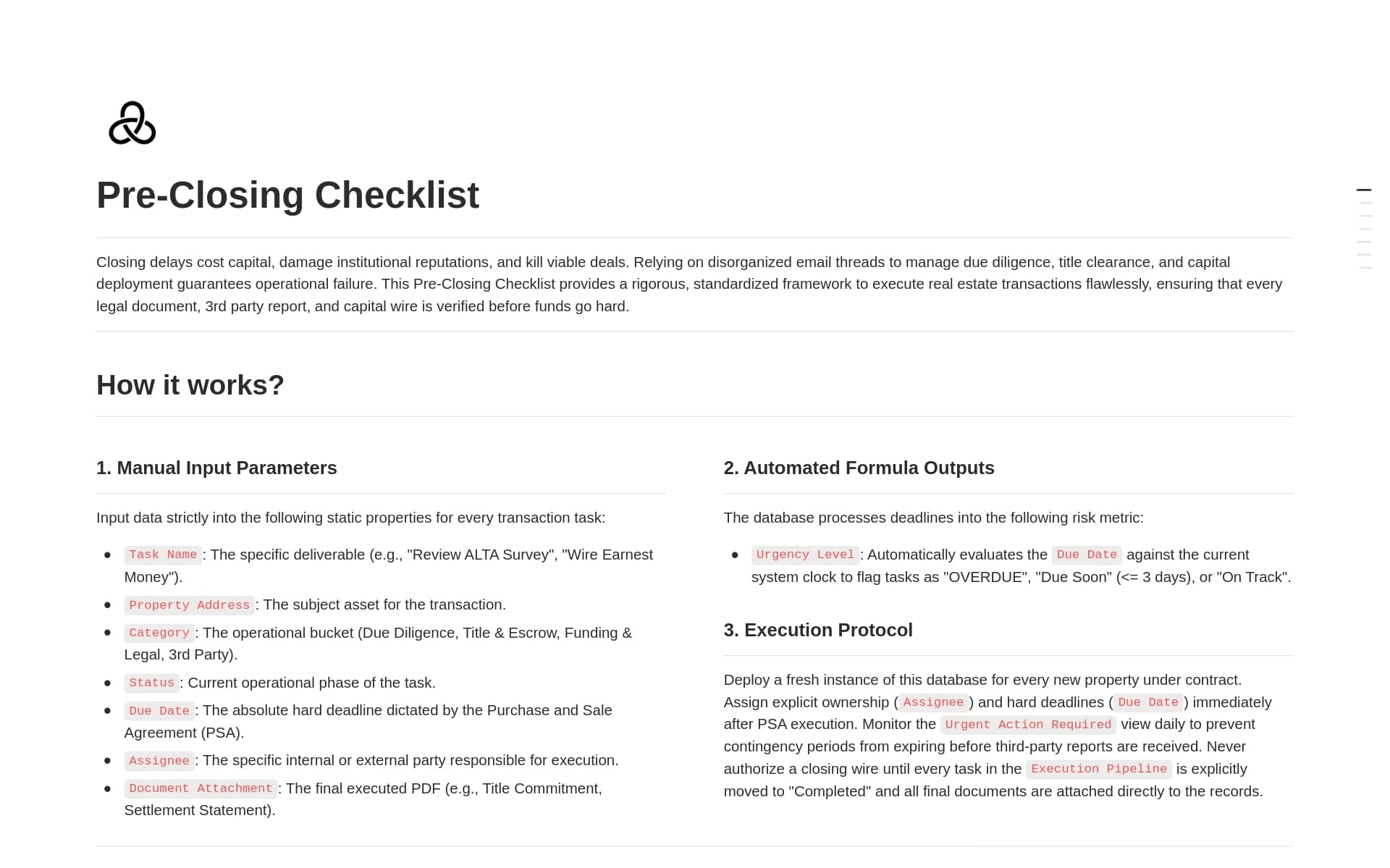
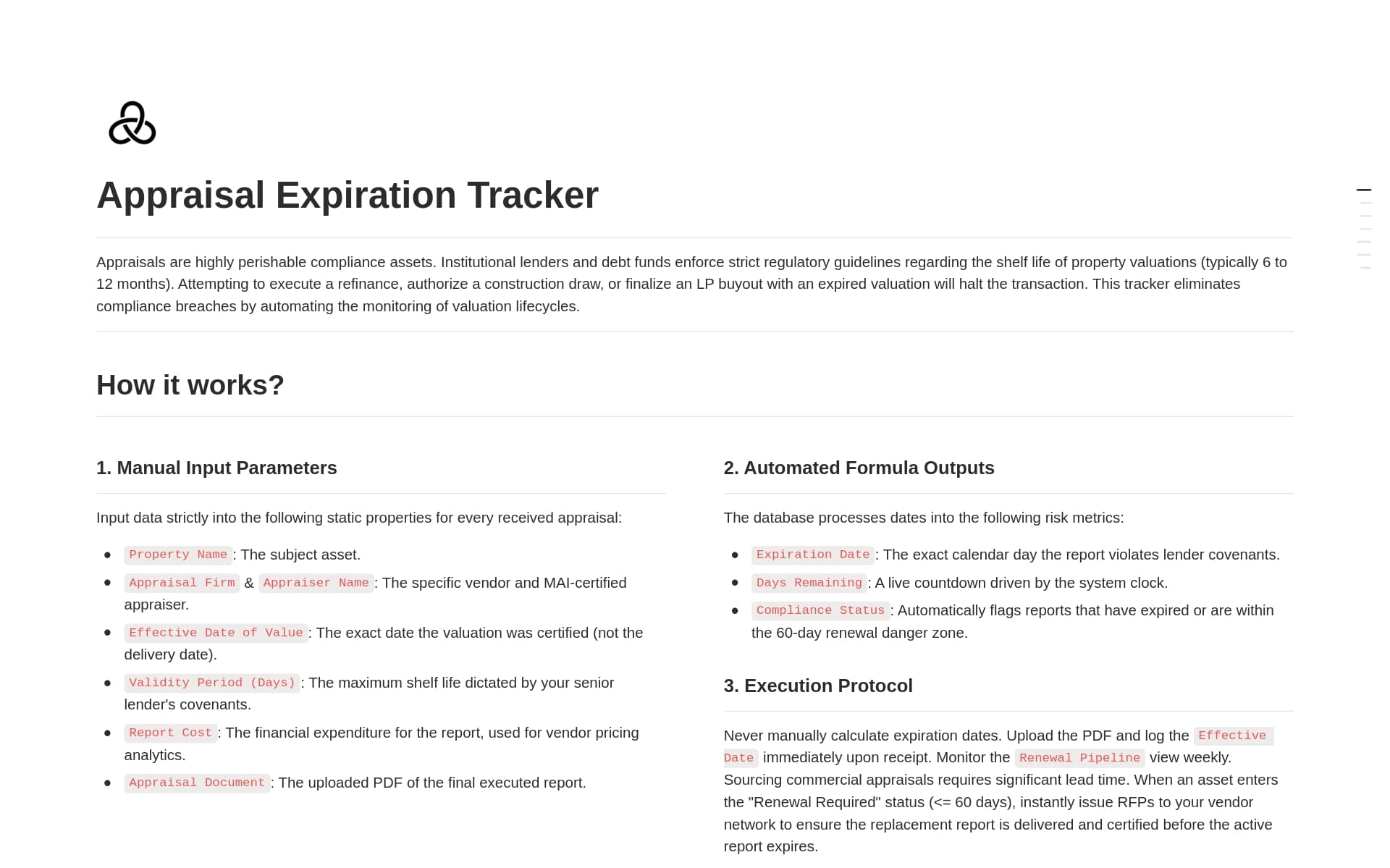
Appraisals are not permanent documents; they are highly perishable compliance assets. Real estate debt funds, banks, and institutional operators are bound by strict regulatory guidelines regarding the shelf life of property valuations. The Appraisal Expiration Tracker eliminates compliance breaches by automating the monitoring of valuation lifecycles and streamlining the procurement pipeline for replacement reports, ensuring you never face a halted transaction due to outdated data.
Expiration Monitoring and Compliance Tracking
Lender covenants generally dictate that an appraisal is only valid for 6 to 12 months. Attempting to execute a refinance, authorize a construction draw, or finalize an LP buyout with an expired valuation will halt the transaction immediately. This database entirely removes human error from compliance tracking. Users input the Effective Date of Value and the required Validity Period (e.g., 365 days). The system utilizes an internal formula to calculate the exact expiration date and simultaneously generates a real-time countdown of Days Remaining. When a report drops below a critical 60-day threshold, the system triggers a visual alert, giving asset managers ample time to procure an updated valuation before the current one officially lapses.
Procurement and Ordering Pipeline Management
Sourcing commercial appraisals is a time-intensive process involving multiple bids, extended turnaround times, and significant capital expenditure. The Tracker includes a dedicated procurement pipeline to manage this workflow. When an appraisal nears expiration, managers move the asset into the Ordering phase. The database systematically tracks the Request for Proposal (RFP) process, logging which appraisal firms were contacted, the quoted fees, and the promised delivery dates. By centralizing the procurement data, operators ensure they are selecting the most cost-effective and timely vendors, preventing closing delays caused by late report deliveries.
Historical Data and Market Intelligence Archiving
Over a multi-year hold period, a single asset may be appraised several times. Discarding old reports destroys valuable proprietary data. The Report Archiving function ensures that every historical valuation is permanently stored and easily retrievable. Users upload the original PDFs, log the unadjusted cap rates used by the appraiser at the time, and track the historical value trajectory of the asset. This creates an internal comp database that is highly useful for underwriting future acquisitions in the same submarket or aggressively challenging aggressive municipal tax assessments with documented historical evidence.